The bulk of my work in the last few years has been period specific for performing at heritage events or as a Supporting Artist for filming. I use fabrics appropriate to the era where budget allows, using a combination of hand and machine sewing on constructed pieces, and I enjoy the challenge of hunting down modern clothing that can be repurposed and reused for twentieth century projects.
2021
November
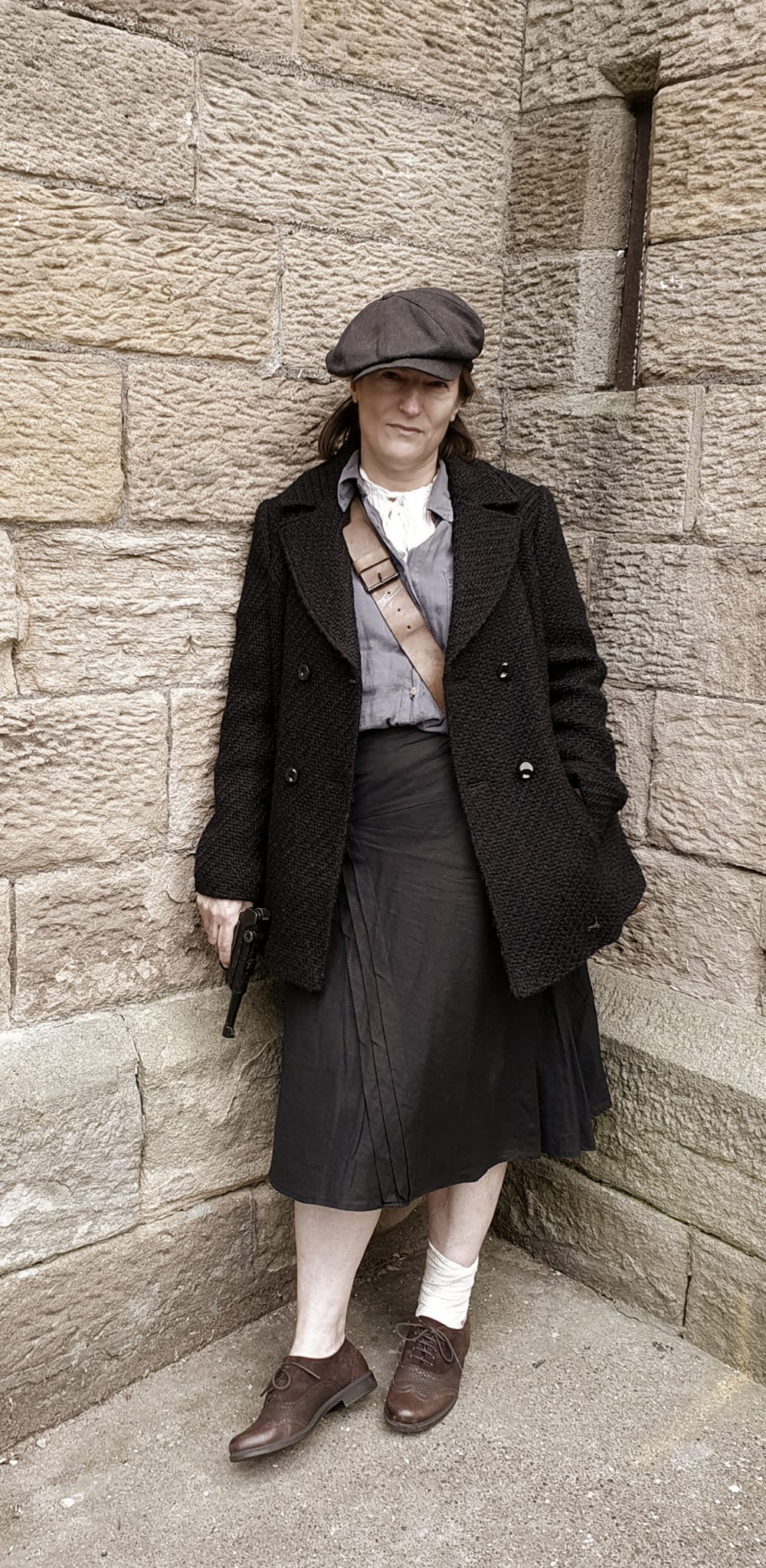
Costume brief – Female Resistance Fighter, Warsaw Ghetto Uprising 1943
At the beginning of November I mentioned to a colleague that I was available for historical events again, so she immediately asked if I wanted a small role in a short docu-drama that our group was being funded to produce for next year’s Holocaust Memorial Day in Newcastle Upon Tyne.
I only had a couple of days to find a costume, so I spent the day going between online photo research of female Jewish resistance fighters in 1940s Warsaw and my wardrobe, trying to pull something together whilst also attempting to learn lines. Thankfully the shoot was pushed back a week.
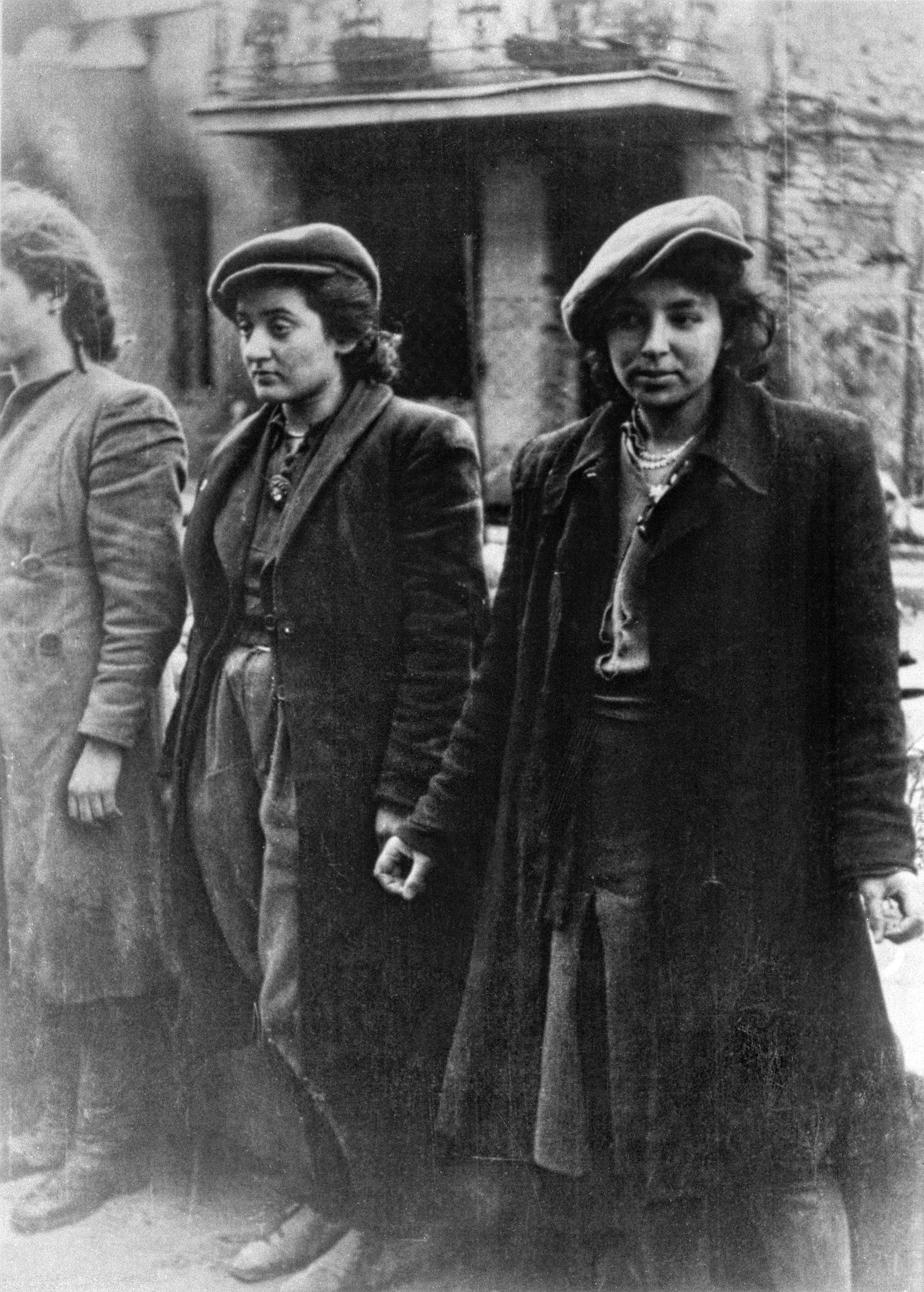
One image in particular kept pulling me back. A well-known photo in the public domain of three fighters forced out of a bunker in the ghetto by SS soldiers. Malka Zdrojewicz on the right of the picture, the only one of the three to survive, became the inspiration for my choice of clothing for the role.
Garments from my wardrobe were a cream cotton blouse worn under a blue linen shirt, a black pleated cotton/linen skirt and a vintage WW2 canvas and leather gas mask bag. The jacket was found in a charity shop, and the Baker Boy cap in a local antique shop. The brown Oxfords, very typical of shoes of the 1940s, came from eBay and are by Hotter who do a line of vintage style shoes. The bandage round my ankle was there to conceal a tattoo and give a more war torn air.
The short documentary titled ‘The Warsaw Uprising’ is available to watch on You Tube now.
To get into the right frame of mind for the role I watched the 2002 film The Pianist by Roman Polanski, based on the Holocaust memoir by Władysław Szpilman, a Polish Jewish pianist. It’s a sobering account of his experiences in the Warsaw ghetto before, during and after the uprising, but well worth taking the time to view.
May – June
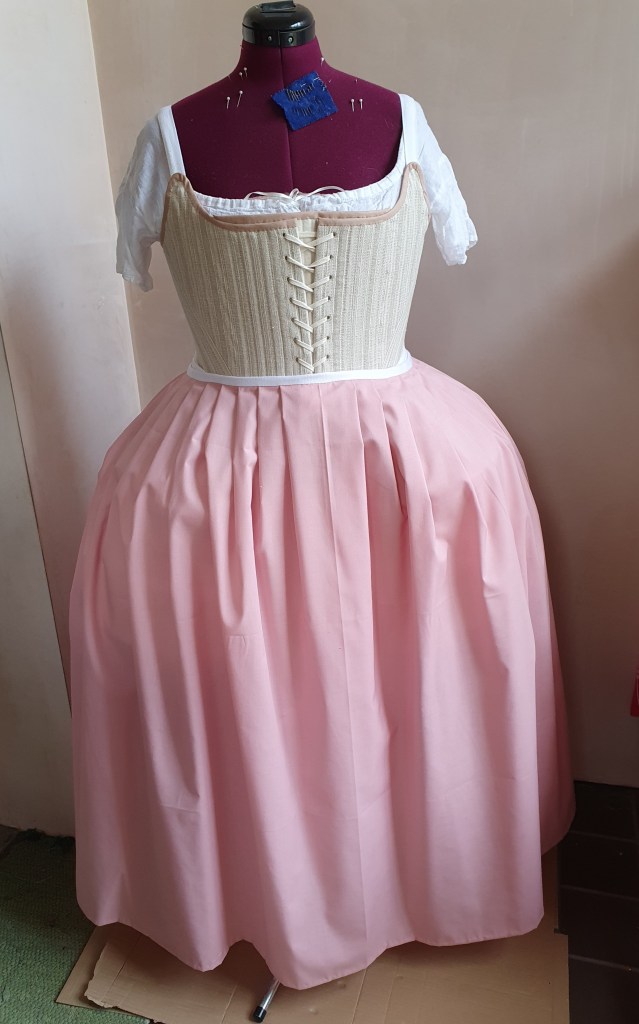
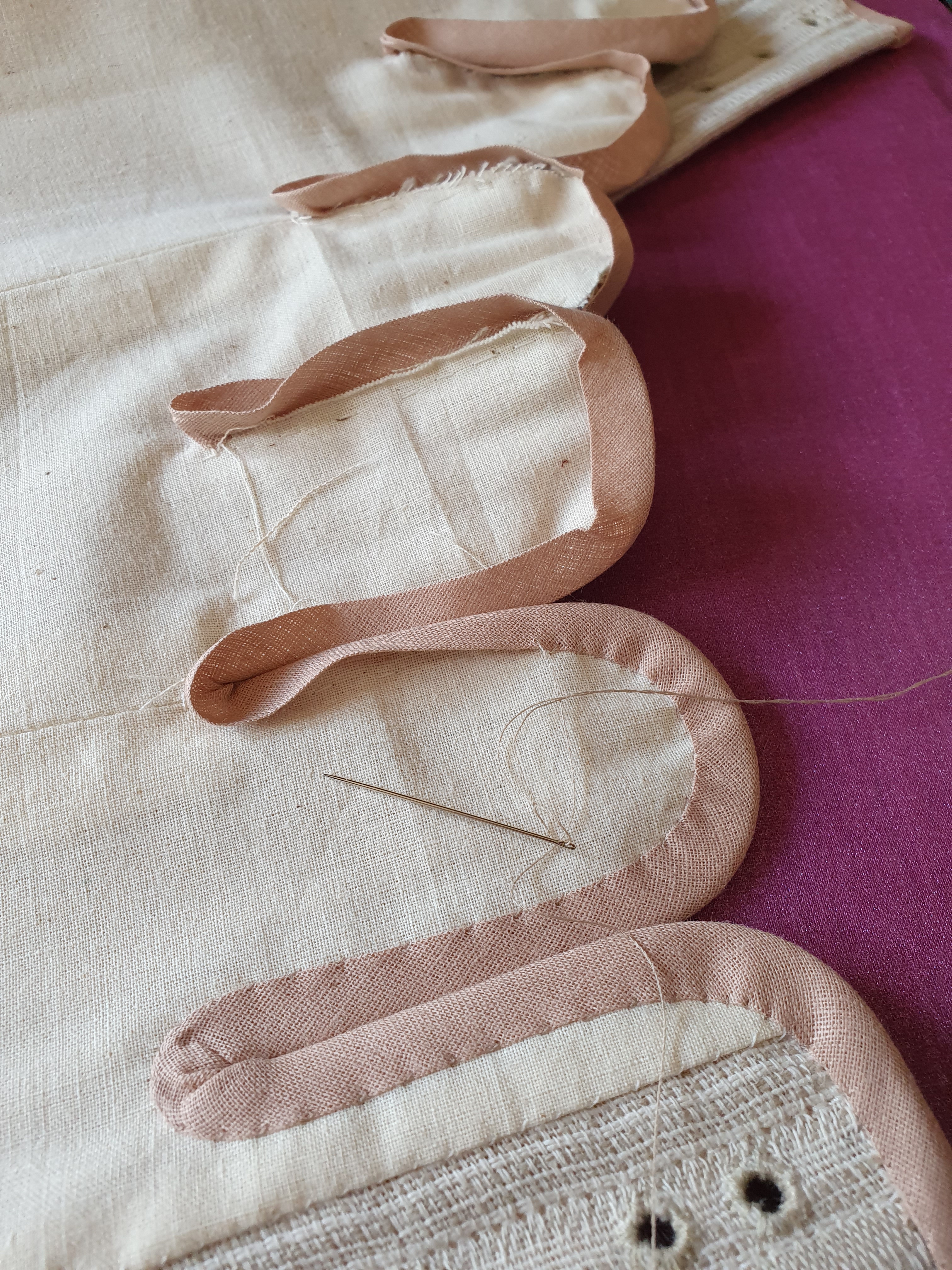
The priority this year was a set of stays and some pocket panniers to improve the silhouette of a roughly early to mid 18th century outfit I’d originally made using a set of Tudor stays as a base, lacking the time or budget to make new stays more appropriate to the period. The stays needed to be front and back lacing to allow individual dressing if no one was around to help, and I wanted them to be in a light coloured material. I used the American Duchess Simplicity 8579 pattern as a starting point, and added a stomacher to help stiffen the front. As both pieces were to be worn as underpinnings for my own use I chose to machine sew all boning channels for speed. Lacing holes and bindings were hand-finished.
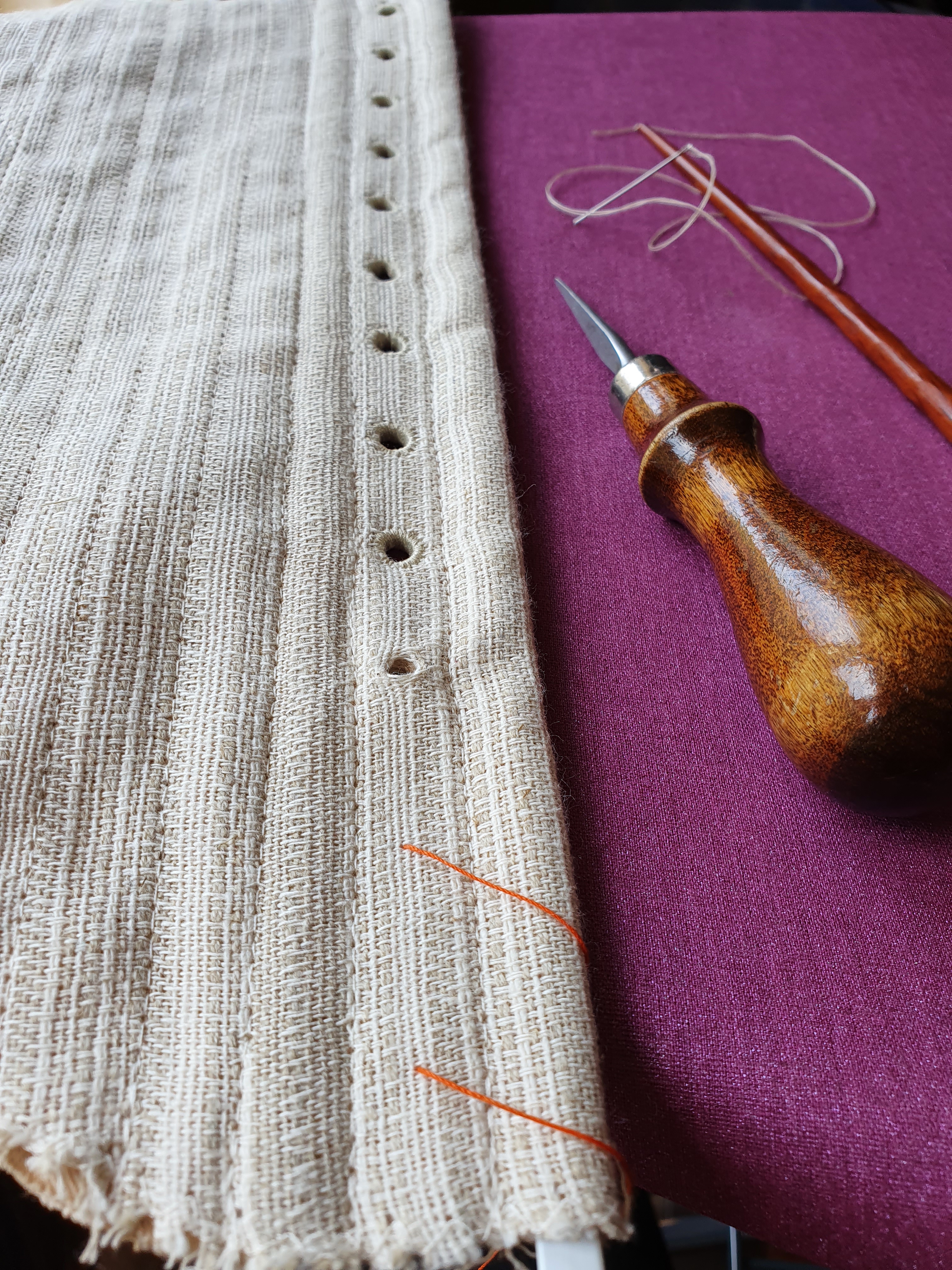
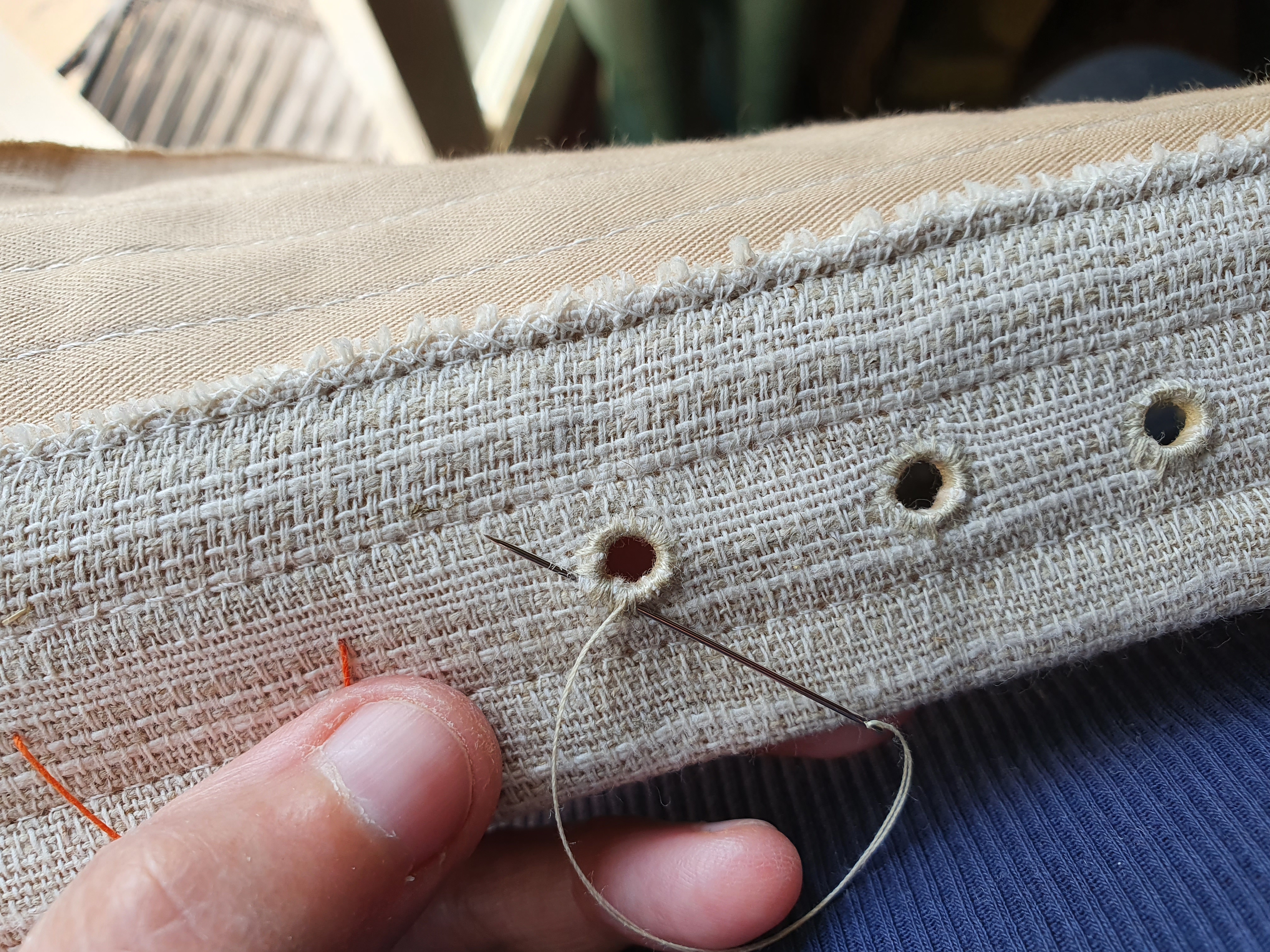
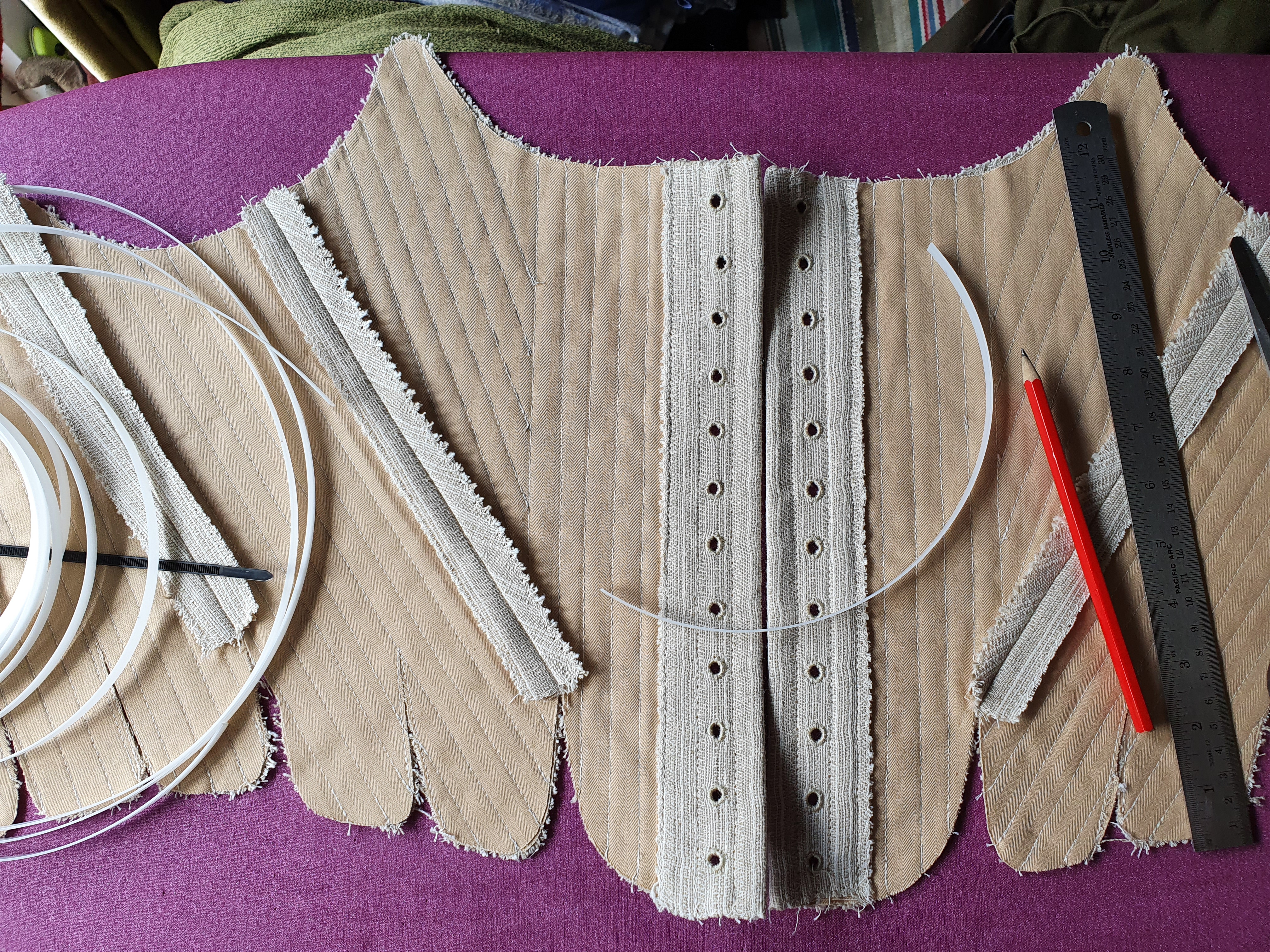
For the boning in the stays and panniers I chose to use synthetic whalebone, as it can easily be cut with scissors and is sturdy enough to give the necessary stiffness needed to maintain shape. I source mine from Vena Cava Design.
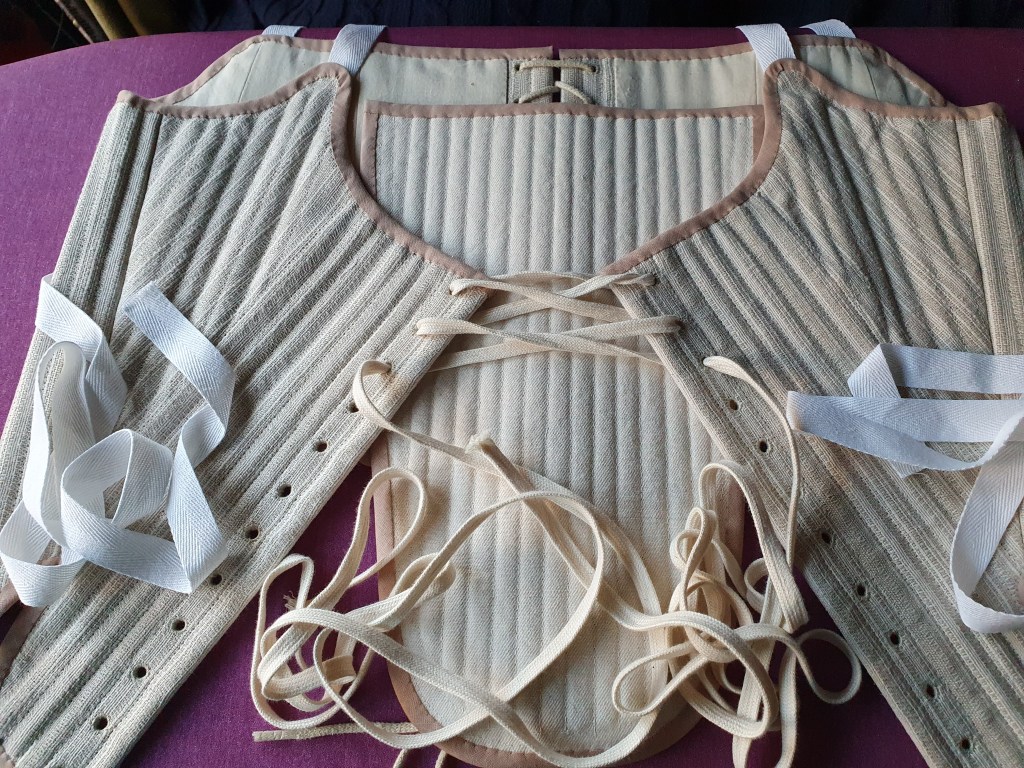
Fabric choices were based on what was already in storage, so the panniers were cut from a sturdy cotton drop cloth, and the stays had a double inner layer of coutil, with the outer layer a cotton/linen fabric and cream cotton for the lining. The stomacher was a double layer of cotton canvas, all bound in cotton bias binding.
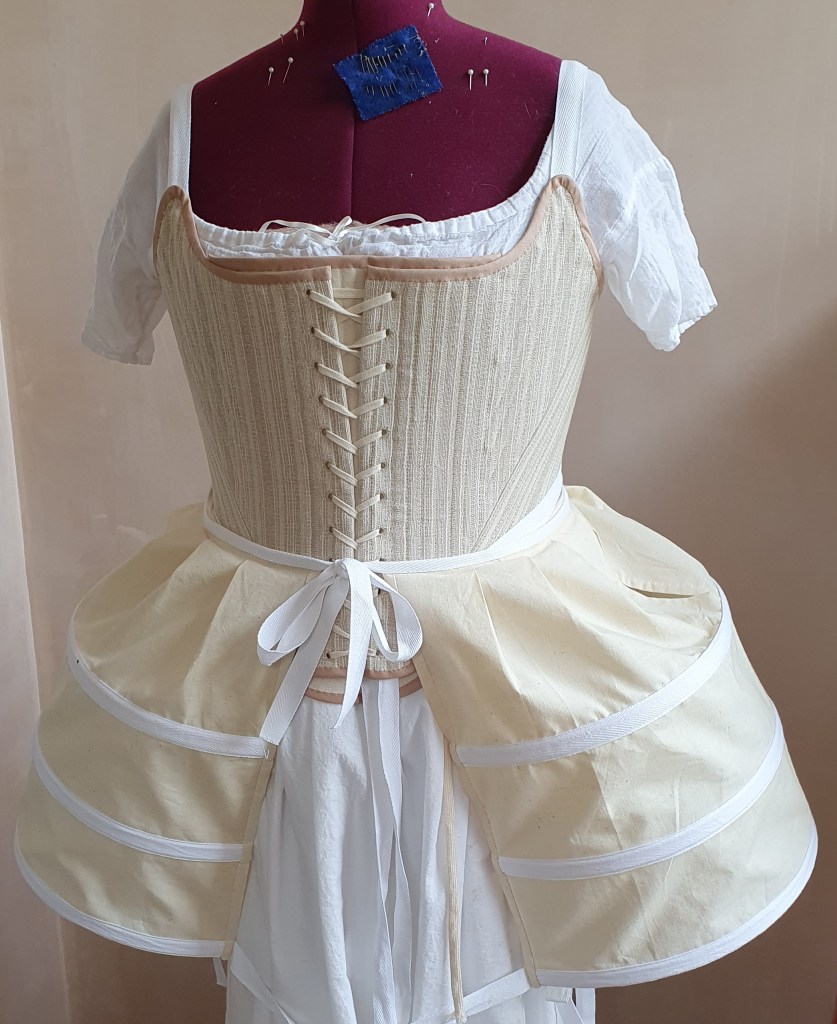
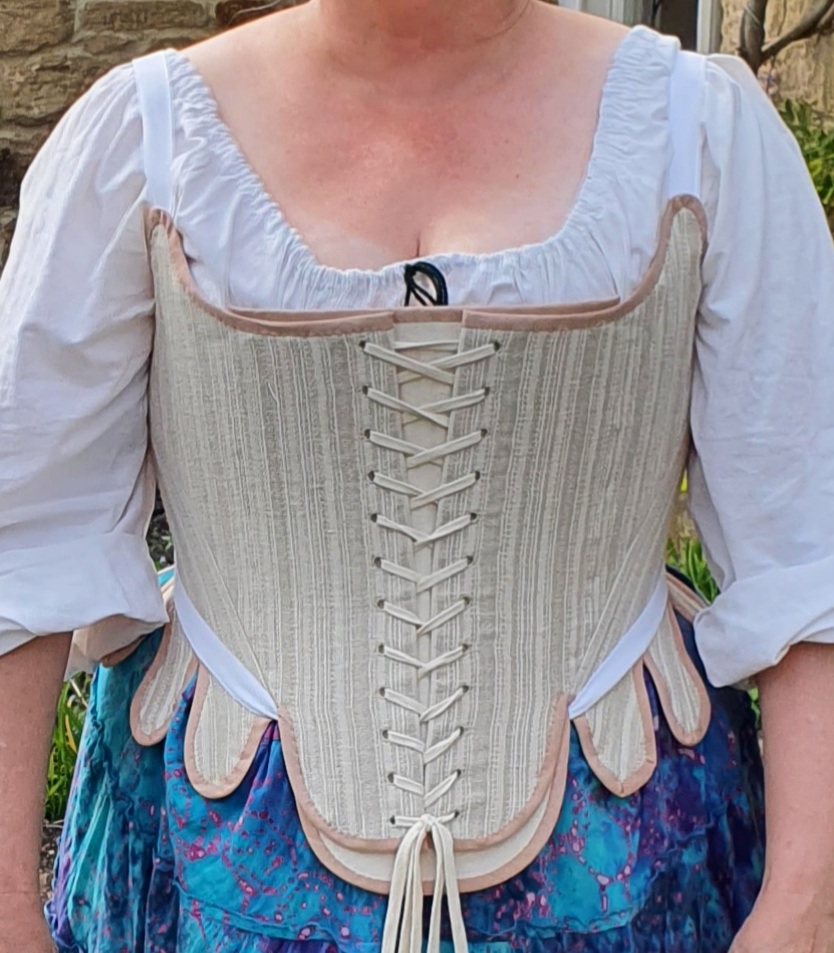
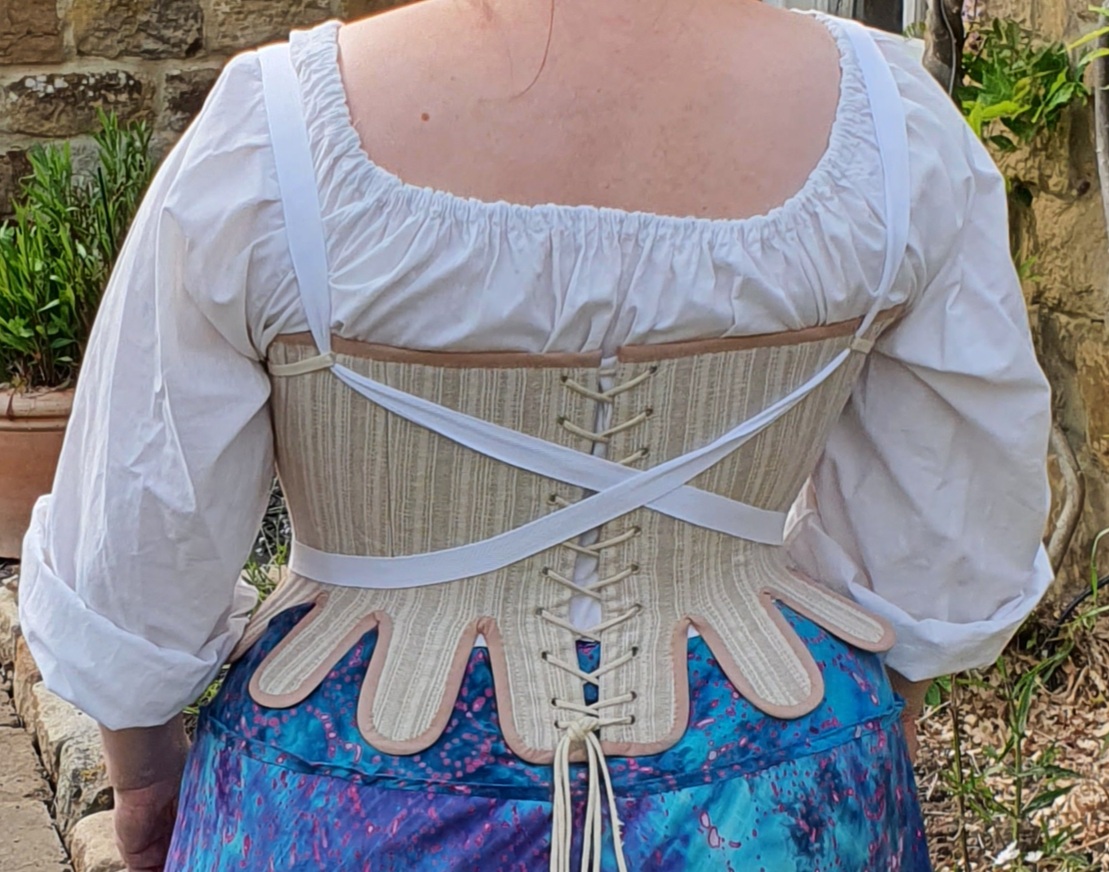
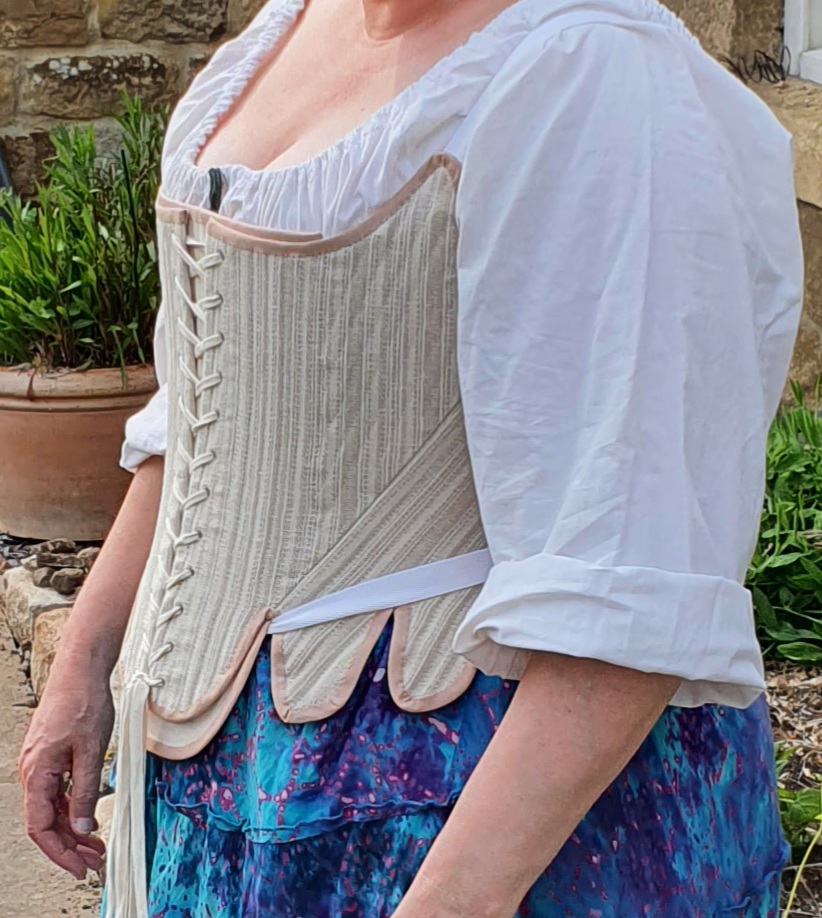
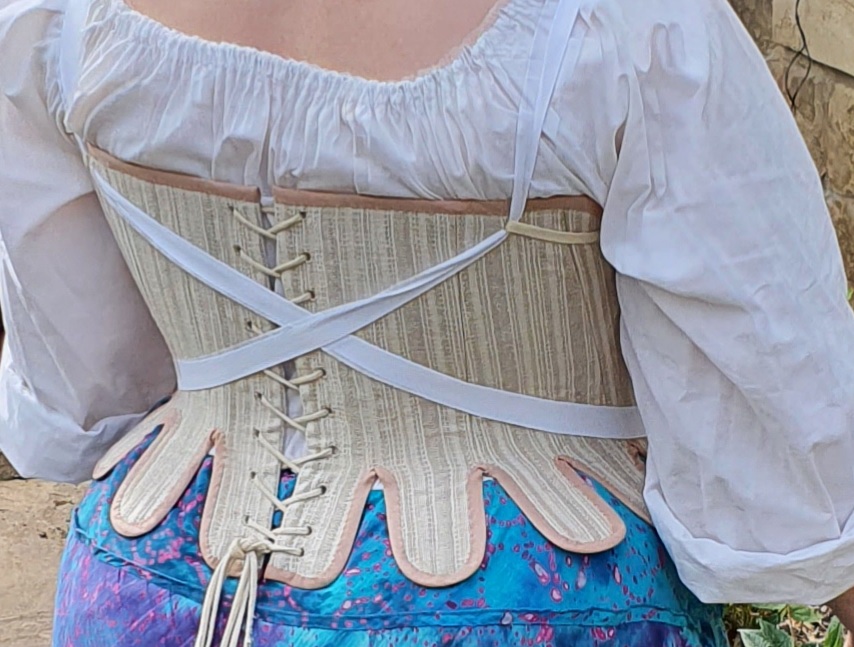
There were some issues with the fit post construction. I failed to allow for the ‘squish factor’ in my original measurements, meaning it fits perfectly and is very comfortable to wear, but my options for cinching it closer were limited. Overlapping the lacing holes at the back, then threading the lace through in a running stitch have since allowed it to be taken in a small amount, and stuffing a small padded roll down the front of the stays works well in giving extra support to the bust and to boost the cleavage.
 Sarah Lowes